

Edibles are having a moment, and it’s not slowing down. Cannabis edibles packaging has become one of the most consequential decisions a brand makes, because gummies, chocolates, tinctures and infused snacks are selling at scale and each product format comes with its own compliance requirements, shelf life considerations and customer expectations.
The numbers tell the story. Global cannabis edibles sales reached $14.8 billion in 2025 and are projected to grow at a 15% CAGR through 2035, according to Global Market Insights. In the U.S. alone, edibles account for roughly 27% of total cannabis sales, trailing only flower and vapes. More products on more shelves means more pressure to get packaging right the first time.
The three formats that dominate edibles packaging are Mylar barrier bags, glass jars and pop top bottles. Each one has a different use case, a different compliance profile and a different effect on how your product reads at retail. Here’s how they stack up.
Table of Contents:
- Mylar barrier bags for cannabis edibles
- Glass jars for cannabis edibles
- Pop top bottles for cannabis edibles
- Compliance is the non-negotiable starting point
- How to choose the right format for your product
- Test before you buy
- Get the right cannabis packaging design for your brand
- Frequently asked questions about edibles packaging
Mylar barrier bags for cannabis edibles
The workhorse of edibles packaging, Mylar bags are lightweight, cost-effective at scale and built for products that need a serious moisture and odor barrier. The multi-layer construction blocks UV light, keeps humidity out and slows down the oxidation that degrades cannabinoids over time. For gummies, chocolates, infused snacks and dried edibles, that level of protection is often exactly what the product needs.
From a compliance standpoint, Mylar bags with a child-resistant zipper closure are approved in most legal cannabis states for edible products. The key is making sure your bags are certified child-resistant, not just “child-resistant style.” California, Colorado, New York and many other states require that edible packaging meet 16 CFR § 1700.20 standards. Several states have adopted or are moving toward stricter ASTM D3475-2024 standards that include senior accessibility testing. A bag that hasn’t been tested and certified for those standards is a liability, not a packaging solution.
Green Rush Packaging carries barrier bags in gram, eighth-ounce, quarter-ounce, half-ounce and ounce sizes, in both opaque and clear styles, with color options including kraft, white, black and gold. Opaque bags are required in states like California and Colorado, so if you’re selling across multiple markets, going opaque from the start saves you from having to manage two separate SKUs.
The flat surface of a Mylar bag is also one of the better canvases in cannabis packaging for branding. There’s room for your brand identity, compliance information, cannabinoid content, batch numbers, warnings and the universal cannabis symbol, all without things feeling crowded. Custom printing or label application both work well on the format.
Glass jars for cannabis edibles
Glass jars work differently. They’re not the most cost-effective option, and they’re heavier to ship. But for certain edible products, they’re the right call, and customers notice the difference.
Glass is chemically inert. It doesn’t interact with the product inside, doesn’t off-gas and doesn’t introduce any risk of flavor contamination. For high-end infused chocolates, luxury gummies or any edible where the product itself is part of the premium experience, a glass jar communicates quality in a way that plastic or foil simply can’t.
There’s also a practical case for jars with certain product formats. Loose gummies or bite-sized edibles are easier to access from a wide-mouth jar than from a foil bag, and a resealable glass jar with a CR lid can feel more premium than a zipper closure for retail display. If your edibles are positioned at a higher price point, the packaging needs to match.
Green Rush Packaging’s child-resistant glass jars are available in 1 oz, 2 oz, 3 oz, 4 oz, 5 oz, 6 oz, 10 oz, 14 oz and 18 oz sizes, with lid and finish combinations including clear black, clear white, matte black and matte white. For edibles, the 3 oz and 4 oz jars are a strong fit for standard retail quantities, while the larger sizes work well for bulk or wholesale formats.
New York’s packaging rules are worth noting here. The state requires cannabis packaging to be plain, with no bright colors, cartoons or imagery that appeals to minors, and edibles must be individually dosed. A clean matte jar with a minimal label can satisfy those requirements while still looking deliberate and intentional on the shelf.
Pop top bottles for cannabis edibles
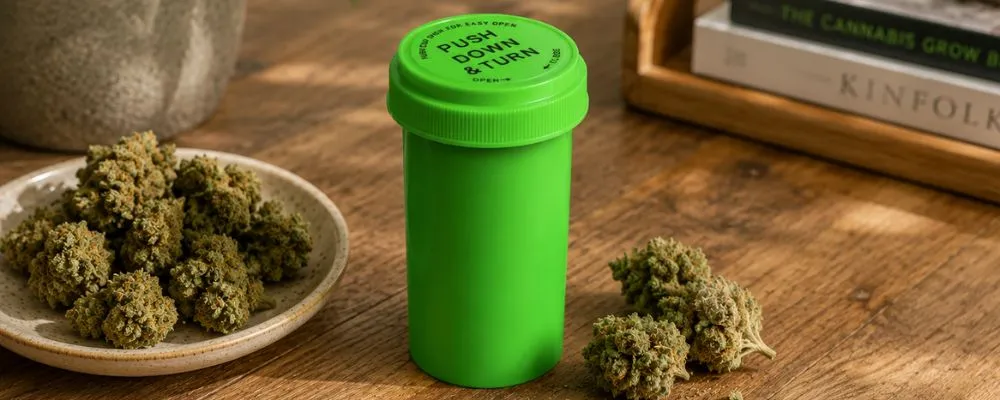
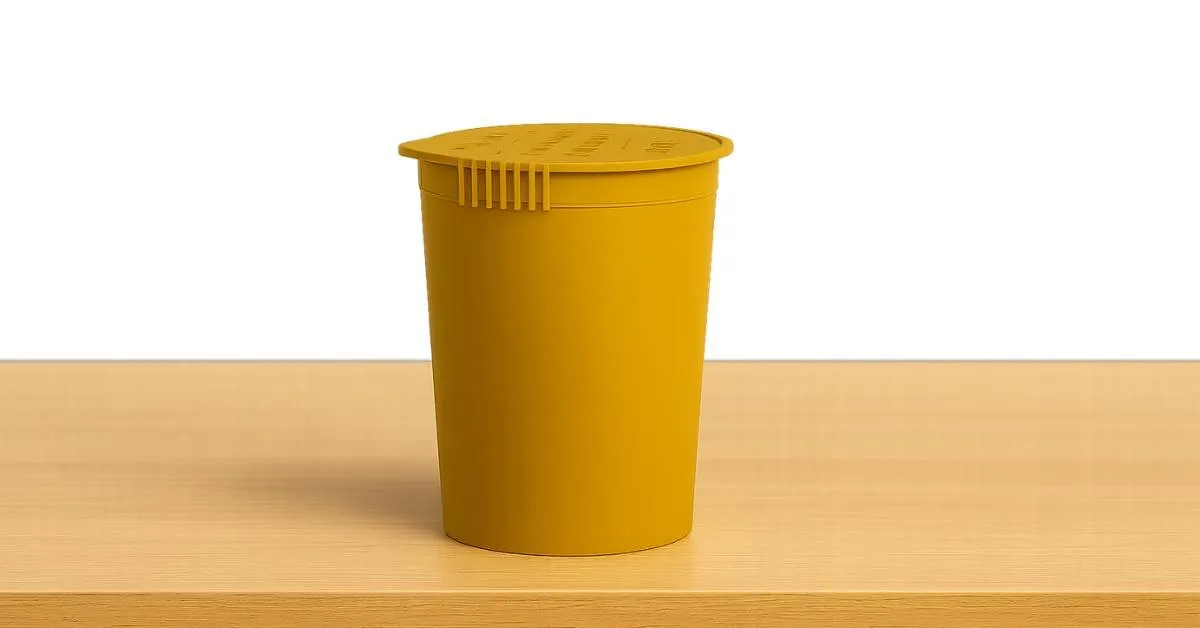
Pop top bottles sit between Mylar bags and glass jars. They’re plastic, which makes them lighter and more affordable than glass, but they offer more structure and shelf presence than a flat bag. The squeeze-to-open mechanism is certified child-resistant, widely accepted across state markets and intuitive enough that customers figure it out quickly.
For edibles, pop tops work best with smaller, discrete items. Capsules, mints, small gummies and single-serving items all fit well in a 13-dram or 19-dram bottle. The format also travels well, holds its shape in transit and stacks easily on retail shelves or in display cases.
Green Rush Packaging carries pop top bottles in 13, 19, 30 and 60 dram sizes, in both translucent and opaque finishes, with color options across black, white, gold, aqua, lime, silver and smoke. The opaque options satisfy state requirements for non-visible packaging, and the variety of colors makes it straightforward to build a product line where each SKU has its own visual identity without swapping out container formats.
One thing to keep in mind: pop tops aren’t resealable in the traditional sense. Once a bottle is opened, the child-resistant function is maintained, but the closure doesn’t create an airtight seal the way a Mylar zipper or a glass jar lid does. For edibles with a shorter shelf life or products that are likely to be consumed in a single sitting, that’s a non-issue. For products meant to be stored over a longer period, a jar or bag with a proper seal is worth the added cost.
Compliance is the non-negotiable starting point
Regardless of which format fits your product, compliance is the baseline. A 2024 surge in voluntary recalls and CPSC warning letters hit edibles brands hard, many of them for packaging that failed child-resistance standards or used designs that could appeal to children. A recall costs $25,000 to $250,000 per SKU before you account for the brand damage.
California caps edibles at 100mg THC per package with 10mg per serving and requires child-resistant, tamper-evident, opaque packaging. Colorado requires individually wrapped edibles that don’t resemble commercial candy or snack packaging. New York mandates individually dosed products in plain, opaque, child-resistant containers. Requirements vary by state and are updated regularly, so checking your specific markets before finalizing a packaging run is essential.
How to choose the right format for your product
The format decision usually comes down to three things: product type, price point and volume.
Mylar bags make sense for most gummies, chocolates and infused snacks sold at standard retail price points. They’re affordable, compliant, easy to label and available in enough sizes and styles to cover most product lines. If you’re moving high volume or selling across multiple states, bags offer the most flexibility.
Glass jars make sense when the product or the brand positioning calls for it. Premium edibles, gift-oriented SKUs or products where the unboxing experience is part of the value proposition are natural fits for glass. The cost is higher, but so is the perceived value.
Pop top bottles make sense for capsules, mints and small discrete edibles where structure and portability matter. They’re also a good option for sampling formats or lower-dose products where the entire contents might be consumed within a few uses.
Some brands use more than one format across their product line, which works well when the formats serve genuinely different purposes. A premium chocolate line in glass jars and a volume gummy SKU in Mylar bags can coexist cleanly within the same brand identity.
Test before you buy
The smartest thing a cannabis edibles packaging buyer can do before committing to a large run is test at small volume first. A limited batch lets you check how the design performs in an actual retail environment, how customers respond to it and whether there are any compliance issues that weren’t caught in the proof stage.
The cost difference per unit on a small run is almost always worth it compared to the cost of discovering a problem after you’ve produced 10,000 units. Get the packaging in front of real customers, in a real dispensary, under real conditions. Adjust based on what you see. Then scale.
Not sure where to start? Order free packaging samples from Green Rush Packaging and get the actual containers in your hands before you commit to a run.
Get the right cannabis packaging design for your brand
Packaging decisions are easier to get right when you’re holding the actual product. Green Rush Packaging offers free samples across our full line so you can evaluate fit, finish, closure performance and how your label sits on the container before you commit to a bulk order.
When you’re ready to talk through your cannabis edibles packaging needs, our team is here to help. Whether you’re building a line from scratch, expanding into new states or rethinking a format that isn’t working, we can help you find the right container, finish and format for your product and your brand.
Contact our design team to get started >
Frequently asked questions about cannabis edibles packaging
What types of packaging are used for cannabis edibles?
The most common formats are Mylar barrier bags, glass jars and pop top bottles. The right choice depends on the product type, price point and state compliance requirements. Mylar bags work well for gummies and chocolates, glass jars suit premium or display-focused products and pop top bottles are a strong option for capsules, mints and small discrete edibles.
Do cannabis edibles need child-resistant packaging?
Yes, in every legal cannabis state. Most markets require packaging that meets 16 CFR § 1700.20 child-resistant standards at minimum, and several states including Minnesota, New York, New Jersey and Missouri are moving toward stricter ASTM D3475-2024 standards. Packaging that doesn’t pass certified child-resistance testing is a compliance risk regardless of how it looks or functions in practice.
Does edibles packaging need to be opaque?
Many states require it. California, Colorado, New York and others mandate opaque packaging so that the product isn’t visible through the container. If you’re selling across multiple state markets, going opaque by default is the simplest way to avoid managing state-specific SKUs.
What size packaging do I need for cannabis edibles?
It depends on the product and the serving size. For standard retail gummy or chocolate SKUs, eighth-ounce to quarter-ounce Mylar bags or 2 oz to 4 oz glass jars are common. For capsules or mints, 13-dram or 19-dram pop top bottles are a natural fit. Testing with your actual product before committing to a run is the best way to confirm the right size.
Can I customize the look of packaging for edibles?
Yes. Mylar bags, glass jars and pop top bottles all accept custom labels, and the flat surfaces of Mylar bags also work well for direct printing. Keep in mind that most states restrict imagery that could appeal to minors, including cartoons, bright colors in certain combinations and designs that mimic candy or snack packaging. Your label design needs to work within those guardrails.