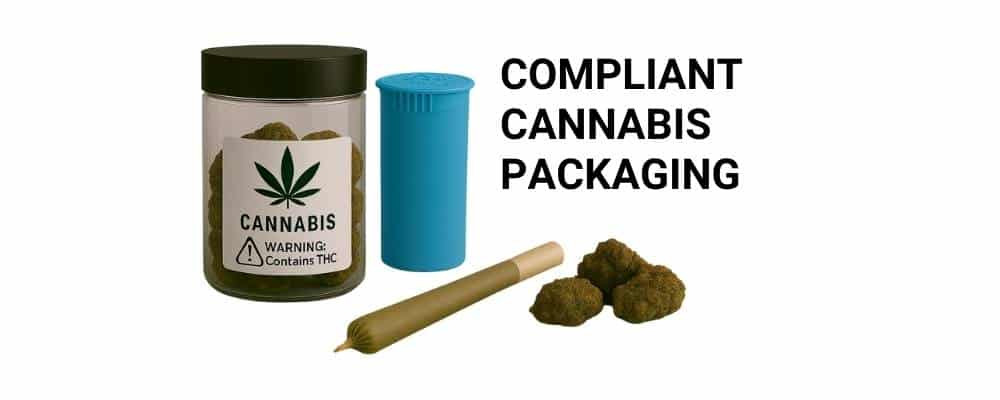



Getting your packaging quantities right feels like solving a puzzle blindfolded. Order too little? You’re scrambling to find emergency suppliers at premium prices. Order too much? Your storage space becomes a cardboard graveyard eating into your cash flow.
The cannabis industry throws extra curveballs at forecasting. Regulations shift overnight. Seasonal demand swings wildly. Flowhub data shows Green Wednesday, 4/20 and holiday periods can drive sales spikes of 140% or more. Supply chains hiccup without warning.
Here’s your systematic approach to maintaining cannabis packaging compliance while getting quantities right, which will save money, space and stress.
Table of Contents:
Step 1: Map your current usage patterns
Start with what you know. Pull your sales data from the past 12-18 months if you have it. Newer businesses can use their first few months and industry benchmarks to establish compliant packaging baselines.
Calculate your base monthly usage
For each product type, track:
- Units sold per month
- Packaging pieces per unit (jars, lids, labels, boxes, bags)
- Peak months vs. slow periods
- Product mix changes over time
Account for cannabis-specific variations
Seasonal swings: Many states see 20-40% higher sales around holidays and summer months. Headset data shows consistent seasonal patterns across legal markets, with summer months and holidays like 4/20 driving significant sales increases. Track your patterns or use industry data for new businesses.
Regulatory changes: Keep 10-15% buffer stock for sudden compliance shifts. Research from the Network for Public Health Law shows that cannabis packaging regulations vary significantly by state, with changes often requiring 60-90 day implementation windows. New child-resistant requirements or labeling changes can force packaging switches overnight and make compliance planning critical.
Product launches: New strains or products can cannibalize existing sales or add volume. Plan conservatively until you have real compliance data.
Sample seasonal multipliers for cannabis packaging compliance:
- January-February: 0.8x base volume
- March-May: 1.0x base volume
- June-August: 1.3x base volume
- September-November: 1.1x base volume
- December: 1.4x base volume
Step 2: Build your forecasting formula
Raw historical data only tells part of the story. You need to factor in growth plans, market changes and the cannabis industry’s unique compliance challenges.
The 3-layer forecasting approach
Layer 1: Base demand
Start with your historical monthly average, adjusted for known seasonal patterns and state-specific compliance requirements.
Base Monthly Need = (Historical Average) × (Seasonal Multiplier) × (Compliance Factor)
Layer 2: Growth projections
Add planned growth from new locations, expanded distribution, product launches or market share gains; maintain compliance standards.
Growth Addition = (Base Monthly Need) × (Growth Percentage)
Layer 3: Safety stock
Cannabis businesses need higher safety stock than other industries for packaging compliance. Supply chain disruptions hit harder when you can’t just grab packaging from any supplier. It must meet specific state regulations.
Safety Stock = (Base + Growth) × (Safety Percentage)
Recommended safety stock levels:
- New businesses: 25-30%
- Established single-state: 20-25%
- Multi-state operations: 15-20%
- Co-packers with multiple clients: 30-35%
Handle forecasting wildcards
- New product launches: Start with 50% of your best-performing similar product’s volume for the first three months plus a buffer month. Adjust quickly based on actual performance.
- Market expansion: Use 70-80% of your established market performance for new regions in months 1-6. Different states have different preferences and buying patterns.
- Regulatory changes: Monitor state cannabis boards and industry publications. When changes are announced, you typically have 60-90 days to adapt. Plan packaging transitions during these windows.
Sample calculation
Let’s say you’re a dispensary with these numbers:
- Historical average: 2,000 exit bags/month
- Seasonal multiplier (June): 1.3x
- Planned growth: 15%
- Safety stock: 20%
June forecast = ((2,000 × 1.3) × 1.15) × 1.20 = 3,588 bags
Round up to 3,600 bags for June ordering.
Step 3: Create your procurement strategy
Having accurate numbers means nothing without smart buying and inventory management that maintains compliance. The goal isn’t just getting quantities right. It’s balancing cost, storage and supply security with meeting all cannabis packaging compliance requirements.
Timing your orders
Lead time mapping: Different packaging types have different lead times.
- Standard stock items: (can be shipped next day) 3-5 business days.
- Custom domestic printed materials: 2-4 weeks.
- Specialty items during busy seasons: 4-6 weeks.
Industry reports indicate that glass packaging lead times have extended by 4-8 weeks due to 2025 tariff policies disrupting global supply chains and straining domestic manufacturing capacity.
Order frequency optimization for cannabis packaging compliance:
- High-volume, stable items: 2-3 month supplies
- Seasonal or promotional items: Buy for the full season
- Custom/printed materials: 3-4 month supplies (minimum order quantities often dictate this)
- New product packaging: 1 month initially, then scale up
Cost optimization tactics
- Volume breaks: Ask your supplier if they offer price breaks at certain quantities, even for specialized cannabis packaging compliance materials. Calculate your 3-6 month needs and see if reaching the next price tier makes financial sense.
- Consolidated ordering: Group compliant items from the same supplier to hit volume thresholds and reduce freight costs.
- Storage trade-offs: Factor in storage costs for compliance inventory. Paying 10% more for smaller quantities might beat warehouse rental and inventory carrying costs.
Solve the storage problem
Limited warehouse space kills many good procurement strategies. Here’s how to work around it:
- Drop-shipping arrangements: Many packaging suppliers offer drop-shipping directly to your production facility or co-packer for compliance-certified materials. This eliminates your storage needs entirely while maintaining inventory control and compliance standards.
- Free warehousing programs: Some suppliers provide free warehousing for larger orders of compliant packaging, releasing inventory as needed. You get volume pricing without storage headaches.
- Just-in-time partnerships: Establish blanket purchase orders with agreed pricing and call off compliant inventory as needed. This works well with local suppliers or those offering same-day shipping of certified materials.
- Inventory staging: For multi-location operations, stage compliant inventory at different facilities to reduce per-location storage needs and maintain supply security across all compliance jurisdictions.
Monitor & adjust
Accurate forecasting is the backbone of successful cannabis operations, but cannabis packaging compliance is not a one-and-done exercise. The cannabis industry is dynamic, shaped by shifting consumer preferences, evolving regulations, seasonal demand and supply chain volatility. Even the most sophisticated compliance forecasting models require regular tuning to stay aligned with regulatory reality.
Think of your cannabis packaging compliance system as a living framework. It must be monitored, measured and refined over time. Without ongoing adjustments, even well-informed projections can quickly become outdated, leading to overstock, stockouts or missed revenue opportunities – and worse, compliance violations.
Here are four essential practices to help you keep your cannabis packaging and inventory forecasts sharp:
- Monthly variance tracking: Compare actual usage to forecasts. Variances over 15% signal you need formula adjustments. Industry best practices suggest that approximately 80% of cannabis businesses struggle with inventory management, making accurate cannabis packaging compliance forecasting critical for competitive advantage.
- Supplier performance monitoring: Track delivery times, quality issues and stock-outs for compliance-certified materials. Unreliable suppliers can destroy good forecasting and put you at compliance risk.
- Market condition alerts: Stay plugged into industry news, regulatory updates and seasonal trends that could impact cannabis packaging compliance demand.
- Quarterly forecast reviews: Adjust your base calculations quarterly based on performance data and compliance changes. What worked in Q1 might miss the mark in Q3 due to new regulations.
Making it work for your business
Forecasting packaging needs in the cannabis industry isn’t one-size-fits-all, especially when compliance requirements vary by state and business type. From cultivation to retail, each segment of the supply chain faces unique challenges that influence how compliant packaging is sourced, stocked and scaled. Whether you’re managing harvest cycles, navigating multi-state cannabis packaging compliance or juggling client demands, your forecasting strategy must reflect the realities of your specific business model and regulatory environment.
Understanding these nuances is key to building a packaging plan that’s both efficient and compliant. Below, we break down how different cannabis business types can tailor their cannabis packaging compliance approach to meet operational demands and stay ahead of regulatory shifts:
- Cannabis brands: Your biggest challenge is balancing brand consistency across multiple states with varying cannabis packaging compliance regulations. Build state-specific forecasting models and maintain buffer stock for regulatory changes.
- Growers: Your packaging needs tie directly to harvest cycles and trim yields while meeting compliance standards. Track compliant packaging per pound of flower and adjust for strain variations and seasonal growing patterns.
- Dispensaries: Focus on exit packaging and merchandising materials that meet local cannabis packaging compliance requirements. Track customer count trends and average transaction sizes to predict compliant packaging needs.
- Co-Packers: You’re forecasting for multiple clients with different seasonality patterns and compliance requirements. Build client-specific models and maintain higher safety stock levels for various state regulations.
Forecast smarter, operate stronger
Getting your cannabis packaging compliance quantities right is about more than avoiding stockouts or clearing warehouse space; it’s about building a smarter, more resilient business that stays on the right side of regulations. With the right compliance forecasting framework, you can reduce waste, control costs and stay agile in a fast-moving, heavily regulated industry.
By mapping your usage patterns, building a layered forecasting formula and creating a strategic procurement plan focused on cannabis packaging compliance, you’ll be better equipped to handle seasonal spikes, regulatory curveballs and supply chain surprises. And by continuously monitoring and adjusting your forecasts, you’ll turn packaging from a reactive expense into a proactive compliance advantage.
At Green Rush Packaging, our cannabis packaging compliance expertise runs as deep as our commitment to premium quality. Contact us today, and let’s discuss your packaging strategy together.
Frequently Asked Questions About Cannabis Packaging Compliance
1. How much safety stock should cannabis businesses keep for packaging?
Cannabis businesses should maintain 25-35% safety stock for packaging, depending on their business model and complexity. New businesses need 25-30% buffer stock due to unpredictable demand patterns. Established single-state operators can maintain 20-25%, while multi-state operations with more predictable patterns can operate with 15-20%. Co-packers serving multiple clients should keep the highest buffer at 30-35% due to varying client demands and compliance requirements across different jurisdictions.
2. How do cannabis packaging regulations differ between states?
Cannabis packaging regulations vary significantly across states, with each jurisdiction having unique requirements for child-resistance, labeling, package sizes and materials. Some states mandate opaque packaging while others allow clear containers. Labeling requirements range from basic THC warnings to detailed ingredient lists and testing information. Package size restrictions also differ. Some states limit flower containers to specific gram amounts while others focus on total THC content. Multi-state operators must maintain separate packaging inventory for each market and monitor regulatory changes across all jurisdictions to ensure ongoing compliance.
3. What happens if you don’t follow cannabis packaging compliance rules?
Non-compliance with cannabis packaging regulations can result in significant penalties including fines, license suspension, product recalls, and forced business closure. Violations may also trigger costly inventory destruction, emergency repackaging requirements and damage to your business reputation. Beyond immediate financial impacts, compliance failures can delay product launches, disrupt supply chains and limit your ability to expand into new markets. The regulatory landscape changes frequently, which makes ongoing compliance monitoring essential for business continuity.
4. How often do cannabis packaging compliance requirements change?
Cannabis packaging compliance requirements change frequently, with most states implementing updates 2-4 times per year. When changes are announced, businesses typically have 60-90 day implementation windows to adapt their packaging systems. Changes can include new child-resistant requirements, updated labeling mandates, modified testing protocols or altered package size restrictions. The frequency of changes varies by state, with newer cannabis markets often implementing more frequent updates as they refine their regulatory frameworks.
5. What’s the average lead time for compliant cannabis packaging materials?
Lead times for compliant cannabis packaging vary significantly by material type and supplier location. Standard stock items like basic exit bags require 3-7 days, while custom printed materials with compliance features need 2-4 weeks. Specialty items during busy seasons can take 4-6 weeks. However, glass jars and plastic containers from overseas suppliers now require 6-8 months due to global supply chain disruptions. Plan accordingly and consider domestic suppliers or just-in-time partnerships to reduce lead times for critical packaging components.